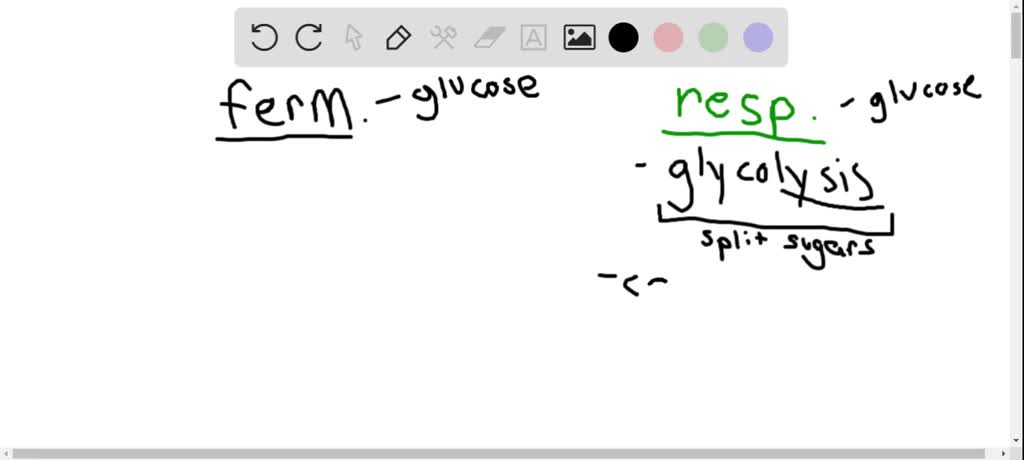
Which Metabolic Pathway Is Common To Cellular Respiration And Fermentation . The reaction produces nad+ and an organic product, typical examples being ethanol, lactic acid, and hydrogen gas (h2), and often also carbon dioxide. (a) the citric acid cycle (b) the electron transport chain (c) glycolysis (d) reduction of pyruvate to lactate.
Solved:______ Is A Metabolic Pathway Common To Both Fermentation And Cellular Respiration. from www.numerade.com
(a) the citric acid cycle (b) the electron transport chain (c) glycolysis (d) reduction of pyruvate to lactate. The three stages of nutrient breakdown are the following:
Solved:______ Is A Metabolic Pathway Common To Both Fermentation And Cellular Respiration.
A metabolic pathway is a series of connected chemical reactions that feed one another. Which metabolic pathway is common to both fermentation and cellular respiration? If aerobic respiration does not occur, nadh must be reoxidized to nad + for reuse as an electron carrier for the glycolytic pathway to continue.
Source: www.numerade.com
Reduction of pyruvate to lactate 58. These parts are glycolysis, the tricarboxylic acid cycle (kreb's cycle), and. The final electron acceptor of the electron transport chain that functions in aerobic oxidative phosphorylation is (a) oxygen.
Source: www.numerade.com
In fermentation, the only energy extraction pathway is glycolysis, with one or two extra reactions tacked on at the end. Occurs in almost all living cells, serving as the starting point for fermentation or cellular respiration cirtic acid cycle a chemical cycle involving 8 steps that completes the metabolic breakdown of glucose molecules begun in glycolysis by oxidizing acetyl coa.
Source: www.chegg.com
The final electron acceptor of the electron transport chain that functions in aerobic oxidative phosphorylation is (a) oxygen. Some types of amino acids can enter as pyruvate. Which of the following metabolic pathways is common to both fermentation and cellular respiration of a glucose molecule?
Source: slideplayer.com
Usually this is pyruvate formed from sugar through glycolysis. There are three steps of cellular respiration and they always occur in this order: Occurs within the mitochondrion in euk, and in the cytosol in prok.
Source: www.chegg.com
What is common in cellular respiration and fermentation? Reduction of pyruvate to lactate 58. Some types of amino acids can enter as pyruvate.
Source: www.chegg.com
Simplified image of cellular respiration pathways, showing the different stages at which various types of molecules can enter. Synthesis of acetyl coa from pyruvate d. If aerobic respiration does not occur, nadh must be reoxidized to nad + for reuse as an electron carrier for the glycolytic pathway to continue.
Source: imle.in
Simplified image of cellular respiration pathways, showing the different stages at which various types of molecules can enter. Occurs within the mitochondrion in euk, and in the cytosol in prok. What is an example of a metabolic pathway?
Source: www.numerade.com
Citric acid cycle (or kreb cycle) stage 3: So, the correct answer is glycolysis. What is common in cellular respiration and fermentation?
Source: slideplayer.com
Which metabolic pathway is used by cellular respiration and fermentation? Ultimately, respiration results in the complete oxidation of glucose, and the transfer of energy from the chemical bonds of glucose to the chemical bonds of atp. The reaction produces nad+ and an organic product, typical examples being ethanol, lactic acid, and hydrogen gas (h2), and often also carbon dioxide.
Source: www.chegg.com
Occurs within the mitochondrion in euk, and in the cytosol in prok. What is an example of a metabolic pathway? Which of the following metabolic pathways produce(s) the most atp, per.
Source: www.chegg.com
The first law of thermodynamics states this, this pathway consumes energy to build up polymers from monomers, this molecule provides energy coupling between exergonic and endergonic reactions, increasing the substrate concentration in enzymatic reaction would overcome which type of inhibition Which of the following metabolic pathways is common to both fermentation and cellular respiration of a glucose molecule? Under anaerobic.
Source: www.numerade.com
There are three main parts to the cellular respiration pathway. Which metabolic pathway is common to both fermentation and cellular respiration? What is common in cellular respiration and fermentation?
Source: www.bartleby.com
Humans cannot ferment alcohol in their own. A) atp, co2, and ethanol (ethyl alcohol) Glycolysis, the kreb’s cycles, and the electron transport chain, all which go through a series of redox reactions.
Source: slideplayer.com
What is common in cellular respiration and fermentation? Which of the following metabolic pathways produce(s) the most atp, per. What is an example of a metabolic pathway?
Source: slideplayer.com
Principles and methodologies” stephanopoulos, aristidou, and nielsen, academic press, 1998 1. Humans cannot ferment alcohol in their own. (a) the citric acid cycle (b) the electron transport chain (c) glycolysis (d) reduction of pyruvate to lactate.
Source: byjus.com
It occurs in the cytosol of the cells. Occurs within the mitochondrion in euk, and in the cytosol in prok. Which pathway is common to both aerobic and anaerobic respiration?
Source: byjus.com
Sugars, glycerol from fats, and some types of amino acids can enter cellular respiration during glycolysis. Which metabolic pathway is common to both fermentation and cellular respiration of a glucose molecule? Respiration involves four different pathways, each pathway feeding into the next.
Source: slideplayer.com
What is an example of a metabolic pathway? Which metabolic pathway is common to both fermentation and cellular respiration of a glucose molecule? Fermentation and cellular respiration begin the same way, with glycolysis.
Source: www.chegg.com
Usually this is pyruvate formed from sugar through glycolysis. (a) the citric acid cycle (b) the electron transport chain (c) glycolysis (d) reduction of pyruvate to lactate. The first law of thermodynamics states this, this pathway consumes energy to build up polymers from monomers, this molecule provides energy coupling between exergonic and endergonic reactions, increasing the substrate concentration in enzymatic.
Source: www.numerade.com
So, the correct answer is glycolysis. Under anaerobic conditions, the absence of oxygen, pyruvic acid can be routed by the organism into one of three pathways: A) atp, co2, and ethanol (ethyl alcohol)